Church Farmhouse, Church End, Hendon, January 2026
A coach took us from the school in the Ridgeway, Mill Hill Village, a short distance to Church End, Hendon, and Church Farmhouse Museum, a local museum that my father would often take us to, at the weekend, to see an exhibition, and then let us run around in the park behind.
This time the exhibition was a really special one: a display of illustrations by Beatrix Potter, so familiar to all children, and a marvel to see in real life, in the intimate environment of small rooms in the historic farmhouse, some of which were set up a period installations.
I peered in absolute wonder, my interview all forgotten, enchanted by the artwork in the cabinets, inches from my eyes, all the familiar characters of the Tales, seeing the tiny details and brushwork close up in a way one might never experience anywhere else. For many children in my class, this would be the only time they had ever been to any sort of museum, or exhibition, and their excitement was immeasurable.
When my children were small, they were taken to the Church Farmhouse too, and into the grounds, and into the park.

The ancient boundary of the Farmhouse is shared with St Mary's churchyard
Fast forward, now, until 2011, when Barnet Tories were running the council.
The materialist values of this group of neo-Thatcherite comedians dictated that, as former councillor Robert Rams put it, if residents wanted culture, they should get on the tube and go elsewhere to find it. Libraries were irrelevant, as 'everyone' had smart phones, so could be cut and shut, and flogged off.
And then: another Tory councillor whispered in the ear of one my spies that they also had their eyes on the Church Farmhouse Museum.
And so it came to pass. The Museum was shut down, and - unforgivably - the local history collection, much of it donated to the museum by trusting residents over decades, was packed up for sale. Richard Cornelius, the then Tory leader, had declared it all to be of 'no worth'.
The idea of value being measurable in terms of anything other than as a commercial commodity was deeply antipathetic to the worldview of Barnet Tories, of course.
As it turned out, the collection was auctioned off for a few thousand pounds, in a church hall somewhere: our irreplaceable local history disposed of at the drop of a hammer.
The Farmhouse itself, a Grade II* listed building, with its distinctive tiled and gabled roof, was supposed to be sold too, despite sustained and widespread protest. Unsurprisingly, however, there were no buyers for a property so well protected by that other Tory bugbear - red tape and regulation, annoying heritage legislation.

Rear view, the Greyhound to the left
In the end the council had to persuade Middlesex University to rent it. They did so with reluctance, but felt obliged to do the council a favour, as they had been so generous in their accommodation of the empire building university's expansion, which would eventually result in the notorious Hendon Hub plan, hatched in secret over a period of years, and which would have seen the two conservation areas in the oldest part of Hendon assaulted by the appearance of multi storey, monstrous buildings, supposedly for student accommodation. The Hub plan failed, and Middlesex gave up the Farmhouse.
Church End has been settled since at least since Saxon times, but archaeological digs in the area around the thousand year old church, and the Farmhouse, have produced Roman finds, for example a cremation urn, which was given to the Museum. Other Roman finds include roof tiles which may be indicative of a large villa: some have suggested even a temple. Intriguingly, there is also a possibility that a Roman road, the Viatores route 167, passed through the centre of this part of Hendon.
High up on a hill in the heart of the oldest part of Church End sits a trio of historic properties, all related and sharing a common boundary: the Church, St Mary's, the seventeenth century Farmhouse, and in between these buildings, the Greyhound, a public house - formerly Church House, still owned by the church, and where a room was used for vestry meetings in the time of the notoriously autocratic and combative Reverend Dr Theodore Williams, for sixty years Rector of Hendon, whose wealth was inherited from the profits of slavery, but whose extravagance result in his serving a term in debtors' prison. The church's wooden boards displaying the Ten Commandments are in the this room in the pub, admonishing customers, which often include local councillors attending meetings at the Town Hall, around the corner.
Time to declare an added personal interest in the history of this corner of Hendon: in a few months my new book, Charles Dickens and his Hidden Family History will be published (Pen & Sword, £25, pre orders coming soon ...) Part of the research for this book was focused on a previously unknown connection of a nearby large property with Dickens, and I also explore new evidence that associates some of his work with local people and places, including the former workhouse. It was already known that Dickens knew Hendon, visited it - and according to one local account had a particular fondness for the view from St Mary's churchyard, adjacent to the back of the Farmhouse grounds. It is still possible to get some idea of what that view would have been, from the grounds - see below.

Detail from the cover of the forthcoming 'Charles Dickens and His Hidden Family History'
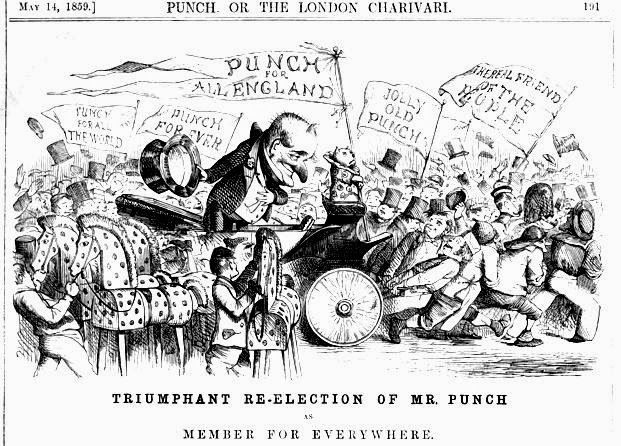
But there were other reasons for Dickens's familiarity with this part of Hendon. His close friend Mark Lemon, later editor of Punch, spent his childhood there - at Church Farmhouse, living with his grandparents and attending services led by the odious Reverend Williams. He wrote about his childhood in Hendon in his book Tom Moody's Tales, published in 1864.
Charles Dickens would have known all about Lemon's connection, when visiting Hendon, seen the Church Farmhouse's rather idiosyncratic design, which in my view might well have inspired the description of Mr Jarndyce's home, Bleak House, in the book of this name which he was writing at the time Dickens had his own personal link to this area. Bleak House stands "with its three peaks in the roof; its various-shaped windows, some so large, some so small, and all so pretty; its trellis-work, against the south-front for roses and honey-suckle, and its homely, comfortable, welcoming look ..."
There is also evidence which suggests Dickens knew all about the Reverend Williams, and it is not implausible that elements of Bleak House's Reverend Chadband and one or two other clerical figures in Dickens's work. In 1844, Lemon had published an article in Punch referring to Williams which appears remarkably close to Dickens's later description of Chadband, in fact.

Mark Lemon, writer, editor of Punch, close friend of Charles Dickens, and resident of Church Farmhouse, Hendon
And now Mark Lemon's family home, and our former museum, seen as disposable by the previous money grabbing Tory administration, is now up for sale by a Labour council, along with its grounds, for the eye-wateringly low price of £1.4 million.

Showing the proximity and shared space of the Farmhouse and church
In this part of North London, such an amount would hardly buy you a decent semi detached family house, but this historic property, and more or less an acre of land, will be sold at this knock down price as 'a development opportunity'. In other words, forget the annoying listed Farmhouse, and consider the grounds, which they think could offer a tidy profit for a developer. Knowing the way such sales are managed by the local authority, a buyer has probably already been tipped off.
Slight problem there, though.
The grounds of Church Farmhouse Museum are, and have been used for decades by the public.The property was acquired by the authority in 1944, and the Museum opened in 1955. A path leads through the grounds, giving right of way to the park behind, which used to form part of Church Farm's fields, in the time when much of this part of Middlesex was given over to hay farming.

The view from Church Farmhouse Grounds
The council tried putting the Farmhouse and grounds up for sale last year, but seems to have 'forgotten' about consultation over the open space and right of way. Hence it was discovered, recently that they had opened one of their 'nonsultations'*, hidden away in a local paper that now has very small circulation, referring to the wrong postcode but more importantly claiming that the plans were available at Hendon Library. They weren't. After this was pointed out, and the fact that it left the authority open to legal challenge, the consultation period was extended. But if you ask for the plans, the promised response didn't materialise, so after more resolute complaining, the period has now been extended until February 5th.
* © G. Roots, circa 2015

This shows - in pink - part of the grounds of Church Farmhouse grounds which, in the 1950s, were appropriated as public space: land immediate to the building, and then, for some reason, part of a pond.
Officers claim that the details of this consent are 'hard to read' but they think the purpose was 'likely' to be for 'public walks and pleasure grounds'. They make no comment about the right of way that has been established across the grounds to the park, however.

So it looks as if half of the grounds at risk are actually protected - or should be. The section further back, through decades of use as a public amenity and right of way, arguably should also be safe. But is it? Has the authority hoped that despite its history, and unexplored archaeology, and position in the heart of a conservation area, a developer will buy the plot at a bargain price, and sling up some monstrous construction? If so, why pitch the price so low? How would that represent best value? Something doesn't quite add up here.
The harsh truth is that when they took over the council, Barnet Labour, under the leadership of Barry Rawlings, inherited a legacy of development plans that they have largely allowed to continue. The monstrous development in Edgware, cooked up in secret between developers and Capita when they ran planning under the Tory administration, is going ahead. This bodes ill for the election chances of Chipping Barnet MP Dan Tomlinson, since the constituency boundaries were redrawn under the previous government, in a move meant to benefit Theresa Villiers, by including parts of Edgware. Other plans have been kicked into the long grass, but will no doubt be signed off by the Secretary of State, after the May elections.
Other, smaller sites have also been sold off for development: some of them sensitive sites with natural woodland habitats now at risk, such as the Christchurch Lane site in Hadley Green - or already destroyed, as in the site near the Eleanor Palmer almshouses. Trying to get a definitive list of these sites has already taken nearly three months - and a formal complaint to the Monitoring Officer.
From an administration whose first action on taking over was to declare a Climate Emergency, this is a pretty poor show.
A Labour councillor whom I took to task over all these Tory/Capita legacy development plans, which no, will not deliver the housing that people actually need, and might be able to afford, said, well - we stopped the Hendon Hub ... No. In fact, the Hub, another scheme cooked up in partnership with Capita planning, was initially waved through by the new Labour council ... until Middlesex Uni decided that it was no longer viable. It never was viable, of course.
Now here we are, with the authority poised to flog off any assets to make capital profit - even if it is not on a significant level, measured against the loss to local communities, our identity and history.
Barnet council could balance the books in other ways. For example, FOI requests show that £2m+ has been wasted so far on the 'Places for Barnet' 'partnership with a company that for some mysterious reason been the subject of additional 'due diligence' checks by the council, for several months.
For the sake of the community, and our local history, surely, it would be better to try to find ways of bringing the property back into use as a community asset? Maybe lottery funding could be found that would enable the Farmhouse Museum to be brought back to life in some form?

Church Farmhouse
In its way, the story of the Church Farmhouse, over the last fifteen years, symbolises the failure of both Tory and Labour administrations to protect our built heritage, in deference to the lobbying of developers whose best interests are not in addressing the real housing need of local people, but extracting maximum profit from minimum investment. The legacy of the Capita run planning, property and regeneration services continues, barely restrained, having created a corrupted process that excludes any real chance of democratic engagement and choice over the future of our heritage and environment.
To lose the Farmhouse would be tragic: to lose the grounds would also lose a public open space, and risk a totally insenstive development of a site of huge historic and archaeological importance, as well of course as loss of open space and access to the park. The listed property and grounds of Church Farmhouse represent an intrinsic part of the group of church buildings: the Greyhound, formerly Church House, and the graveyard, all of which flow into each other, and share a common ancient boundary on the park side. The graveyard and the park behind the Farmhouse, both of which are linked to the Farmhouse grounds, are a 'Site of Local Importance for Nature Conservation'. To allow development here should be unthinkable.
If you agree, please object to the sale before February 5th via this email link:
Syma.Kadri@barnet.gov.uk

The steps down from Church Farmhouse grounds to the park